
Support
Ceramics is one of the oldest and most noble materials in human history. Derived from the Greek term “Kéramos” (“burnt clay”), ceramics refers to the art of producing artistic, utilitarian or decorative objects, using clay as the main raw material.
The process involves shaping the ceramic paste, applying a ceramic glaze (white or colored), and firing at high temperatures. This thermal stage gives the material high strength, durability, and stability. As a result, the resulting products exhibit excellent impermeability, high hardness, and remarkable mechanical properties.
Furthermore, the ceramic surface type makes cleaning and maintenance easier, while helping to reduce the proliferation of fungi and bacteria, making it ideal for applications in environments that require high hygiene standards.
So preserve the original shine of the glazed surfaces, Whether white or colored, throughout the product's useful life, we recommend careful handling and proper cleaning, as per the guidelines below.
Care and Maintenance of Ceramic Products
At Arch Valadares the excellence of our products begins with the choice of materials and extends to their durability and ease of maintenance. The glazed ceramic surfaces we produce are recognized for their resistance, impermeability, durability, and antibacterial properties, ideal for environments that require high hygiene standards.
Regular cleaning
To preserve the shine and integrity of the glazes, we recommend:
- Use neutral, non-abrasive detergent with a soft cloth or sponge.
- Rinse with clean water and dry with a soft cloth.
- Avoid products with a pH higher than 10 and abrasive materials.
Dirt stains or limescale deposits can form when cleaning is infrequent or when water quality is inadequate. In these situations, using neutral detergent may be insufficient, and the following precautions are recommended: removal solutions:
Limestone Removal
Limescale deposits are commonly observed in urinal and toilet siphons and can change the surface color:
Prevention: Use a toilet brush regularly to prevent the formation of mineral residues;
In more persistent cases:
1. Remove all water from the affected area;
2. Apply one of the following solutions:
- Hydrochloric acid diluted to 50% (domestic use): Leave to act for up to 10 minutes;
- White vinegar (acetic acid ~5%): Leave to act for 1 hour.
3. Rinse and dry with a clean cloth.
Avoid contact with metal surfaces and wear protective gloves. Never mix different products.
Persistent Dirt Removal
In cases of difficult stains:
1. Prepare a solution of 2 parts sodium bicarbonate and 1 part hydrogen peroxide (Volume 10 or 20);
2. Apply the solution directly to the affected areas;
3. Leave to act for 1 hour, rinse and dry with a clean cloth.
Avoid contact with metal surfaces and wear protective gloves. Never mix different products.
Ecological alternatives
ARCH SA promotes sustainable practices, encouraging the use of effective and environmentally friendly cleaning solutions:
- White vinegar + water (1:1);
- Mixture of baking soda + neutral detergent;
- Certified biodegradable products.
With simple, regular care, our products stay looking like new for many years.
The toilet seats ARCH SA designed in Termodur – both in white and colored – stand out for their excellent mechanical properties, wear resistance e high antibacterial behavior.
This material obtained by Thermocompression combines durability, dimensional stability, moisture resistance, wear, and ease of maintenance.
Although Termodur offers good thermal resistance, it should not be exposed to direct contact with hot objects, as it can compromise the integrity of the top surface. Despite its robustness, the material can chip or fracture when subjected to strong impacts or heavy objects falling.

Care and Maintenance of Termodur Toilet seats
At Arch Valdares, the excellence of our toilet seats begins with the careful selection of materials. To ensure their durability and good performance, we recommend the following practices:
Regular cleaning
It is recommended to carry out regular cleaning of the Termodur toilet seats, in order to avoid the accumulation of dirt and the appearance of spots, namely yellowish spots, often resulting from a lack of adequate maintenance.
- Use neutral detergent diluted with warm water, applied with cloth ou soft sponge;
- Rinse with clean water, removing any detergent residue;
- Dry carefully with a dry, soft cloth, avoiding watermarks and preserving the surface shine;
- In the end, the hinges must be dry with the help of a dry cloth.
Dirt stains or limescale deposits can form when cleaning is infrequent, when water quality is inadequate, or when using non-recommended products. In these situations, using neutral detergent may be insufficient, and the following precautions are recommended: removal solutions:
Removing Persistent Stains
In cases of difficult stains:
1. Prepare a paste of 2 parts baking soda and 1 part hydrogen peroxide (Volume 10 or 20);
2. Apply the solution directly to the affected areas;
3. Rub with gentle circular movements;
4. Leave to act for 5 minutes, rinse and dry with a clean cloth.
Avoid contact with metal surfaces and wear protective gloves.
Cleaning with Clip-Off
Clip-off fasteners make it easier to remove the toilet seat, ideal for more thorough cleaning and simplified maintenance.
Its removal does not require the use of tools, it only requires pressing or releasing the fixing mechanism.

Simple care to preserve and extend the life of your Toilet seats
To ensure proper functioning and increase the durability of the toilet seats, the guidelines below must be followed:
Check the hinges regularly:
- Confirm that the hinges are well fixed e no breaks between the top and the dishes.
- Loose hinges compromise the stability of the top and the cushioned fall operation (soft close).
How to test:
- With the toilet seat (lid and frame) in the open position, gently move it side to side. If the top is installed correctly, it should remain firmly in place, without any play or movement during this test.
- If there is any play, the hinges should be readjusted as recommended by the manufacturer. Ignoring this issue can cause irreversible damage to the soft-close.
Causes for the toilet seat no longer performing the soft-close function:
1 - Incorrect use
Misuse is the main cause of soft-close failures.
If the top worked well initially but stopped working properly after a few weeks or months, the most likely cause of the failure is related to incorrect use of the top.
Force the lid to close, toilet, or drop it suddenly are some of the actions that can damage the system's internal components.
Avoid:
- Drop the lid suddenly
- Force manual closing
- Slam the lid against the toilet
When this happens, the only solution is to replace the internal cartridges. To do this, consult your distributor to identify the correct part number and purchase the new part.
2 - Improper installation
Small gaps in the fasteners may not be noticeable immediately after installation, but they tend to appear with daily use and repeated movements. These gaps compromise the stability of the top and negatively affect the operation of the soft-close system.
It's crucial to correct them as soon as they're identified. If ignored, they can cause irreversible damage to the mechanism's internal cartridges.
A well-installed top must remain stable, without any gaps or abnormal lateral movements.
Regular cleaning
Keep the top and soft-close system clean and free of debris, following the manufacturer's recommendations. This helps prevent limescale or moisture buildup, which can compromise the soft-close mechanism's operation.
Special Care for Colored Toilet seats
Toilet seats with a colored finish require extra attention to preserve their appearance and durability.
Therefore, during installation, it is essential to ensure careful handling to avoid scratches or damage to the finish, especially in visible areas or areas subject to direct contact.
It is recommended to use adequate protection during transport and assembly to prevent scratches.

Regular cleaning
- Use neutral, non-abrasive detergent with a soft cloth or sponge.
- Never use aggressive products or abrasive utensils.
- Clean regularly to prevent residue build-up and preserve the finish.
Installation quotas
Recommended installation measures
A - Height of the fixing to the floor | B - Free distance | C - Total height of the wall-hung toilet
Recommended installation dimensions (mm)
It is considered as "floor" The final level, including all coatings.
Installation quotas
Recommended installation measures
A - Height of the fixing to the floor | B - Free distance | F - Total height of the wall-hung bidet.
C - Height of water points | D- Height from sewer to floor | E - Distance from water sources
Recommended installation dimensions (mm)
It is considered as "floor" The final level, including all coatings.

TECHNICAL ALERT
Use of Acetic Silicones in Sanitary Ware
The following recommendations aim to highlight the potential risks associated with the use of acetic-cure silicones in the installation, assembly, or sealing of sanitary components.
Although widely used in construction applications and humid environments, certain silicones can cause physical, chemical, or functional changes in the materials they come into contact with, compromising the performance and durability of the systems.
For this reason, the selection of a sealant should not be based solely on its commercial name or generic application, as "sanitary silicone", and its chemical compatibility with all materials present in the assembly must always be ensured.
What is one Acetic Cure Silicone?
One-component silicones can utilize different chemical curing systems. Acetic curing silicones... (Acetoxy)Polymerization occurs through reaction with atmospheric moisture, releasing acetic acid as a byproduct of the curing process. This characteristic is easily identifiable by its characteristic vinegar-like odor during application.
It is important to emphasize that the potential risk of incompatibility is not associated with silicone as an elastomeric material, but rather with the chemistry involved in its curing mechanism and the byproducts released during this process.
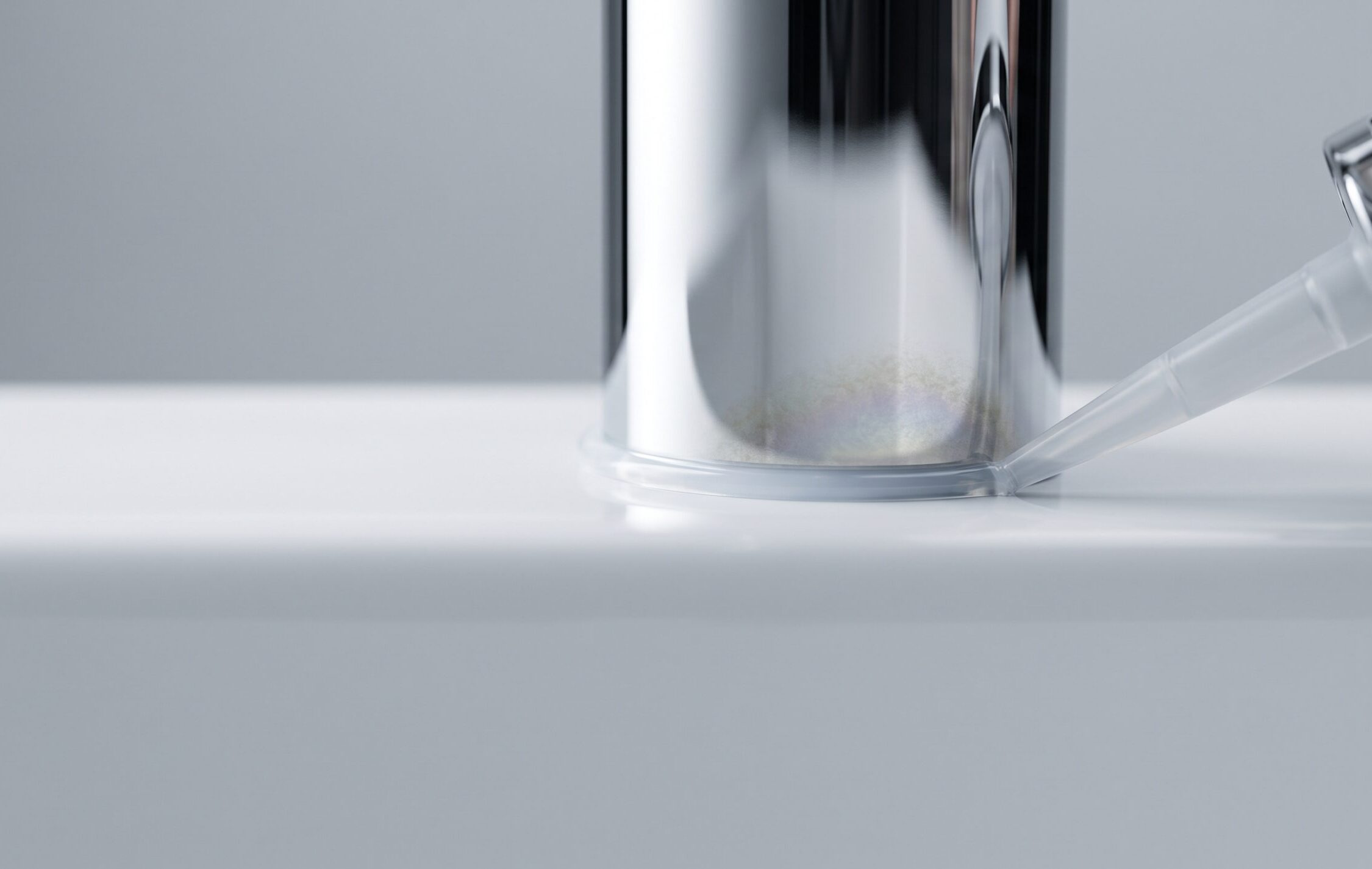
Potential Compatibility Issues
During the curing of acetoxy silicones, acetic acid is released. When this byproduct remains in contact with certain materials, especially in humid environments and for prolonged periods, degradation or loss of performance may occur.
Among the main risks identified are:
Corrosion of metallic elements
Changes in color or surface stains
Deterioration of coatings and surface treatments
Degradation of certain plastics and elastomers
Loss of mechanical properties
Reduced adhesion capacity
Premature aging of components
Compromised sealing function
It is important to note that these limitations are often identified by the manufacturers of these products themselves, through their respective technical data sheets and usage recommendations.
The Concept of "Sanitary Silicone"
"Sanitary silicone" does not mean "compatible with all sanitary materials".
One of the most common misconceptions is assuming that a product commercially identified as sanitary silicone is automatically compatible with any component used in sanitary installations. From a technical point of view, this interpretation is incorrect.
The term "sanitary" indicates normalIt is understood that the product was developed for use in humid environments, often containing antifungal or anti-mold agents. However, this classification does not guarantee compatibility with all materials present in sanitary systems.
There are several commercially available acetic-cure silicones specifically for sanitary applications, including bathtubs, showers, sinks, and kitchens, whose technical data sheets establish restrictions regarding certain substrates and materials.
Relevance to Sanitary Components
Modern sanitary components are often made up of complex combinations of materials, and may include:
- Plastic components;
- Elastomers;
- Gaskets and seals;
- Metallic elements;
- Coatings;
- Structural adhesives;
- Components with different surface treatments.
For example, a drain valve or a built-in tank may appear to be made mostly of plastic, but internally incorporate various materials with different chemical sensitivities.
Additionally, this equipment remains normalmentally in service for many years, exposed to high humidity environments and subjected to continuous cycles of use.
In this context, the compatibility between the sealant and the surrounding materials should be considered a fundamental requirement for the durability and reliability of the system, and not merely a condition for ensuring initial adhesion.
Acetic Cure Silicone versus Neutral Cure Silicone
In applications involving multiple materials, the use of neutral silicones is often a solution. technically more appropriate, provided that specific compatibility is confirmed beforehand.
Unlike acetoxy silicones, neutral-cure silicones do not release acetic acid during the polymerization process, significantly reducing the risks of chemical incompatibility with various metals, plastics, and elastomers.
Currently, there are neutral-cure formulations on the market specifically developed for:
- High humidity environments;
- Sanitary applications;
- Metallic substrates;
- Sensitive plastic materials;
- Systems that combine different materials.
The alternative to using an acetic-curing silicone is not to eliminate the use of silicone altogether, but rather to select the curing technology best suited to the application, the materials present, and the service conditions.
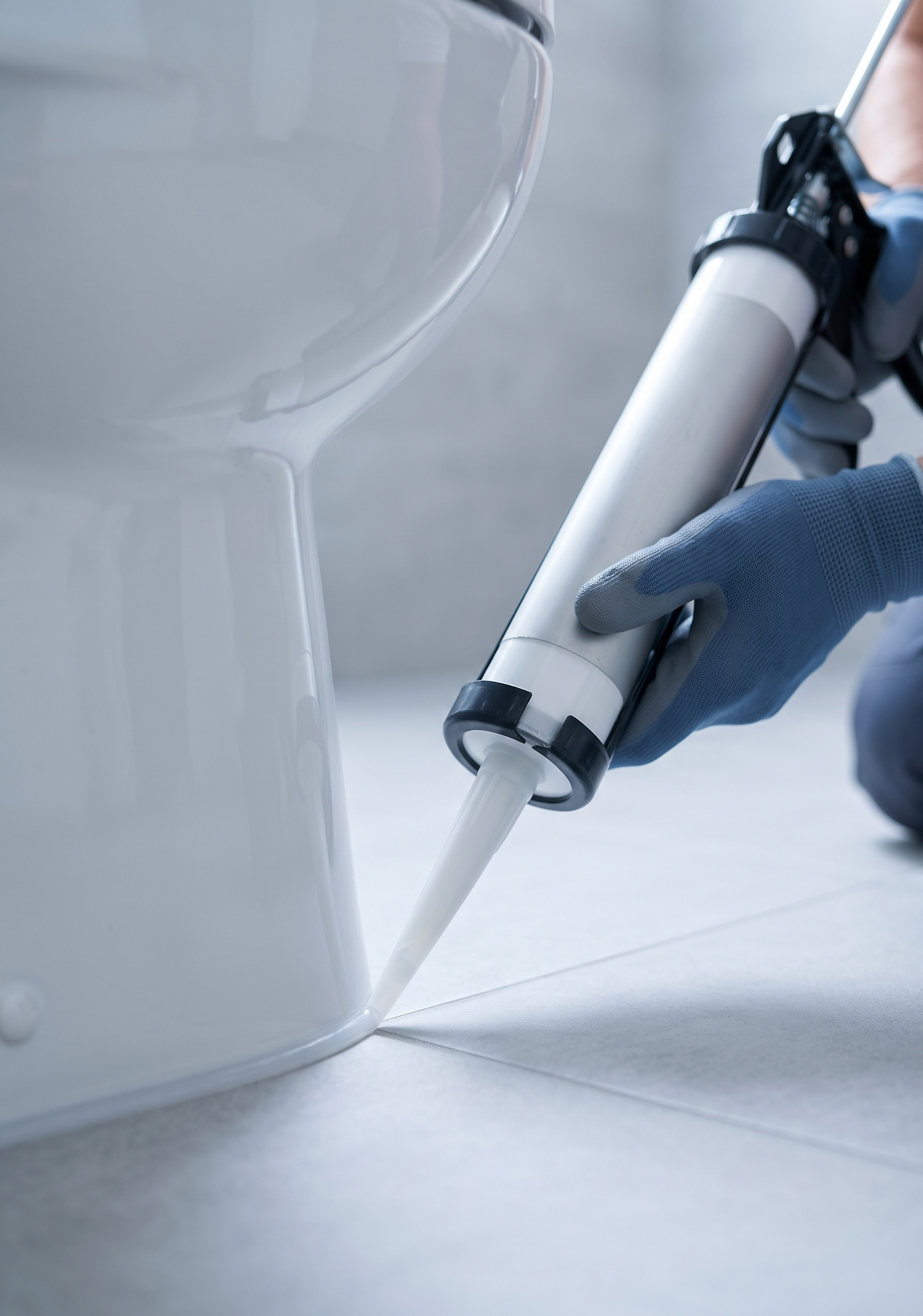
Conclusion
The correct selection of sealant is a determining factor for the reliability, durability, and performance of sanitary systems. The indiscriminate use of acetic-cure silicones can lead to chemical compatibility problems that may compromise the integrity of the components over time.
Therefore, it is recommended that the choice of sealant product be made based on technical criteria of material compatibility, favoring neutral-cure solutions or others expressly validated for the application in question.
Most of the installation components supplied by ARCHThey guarantee perfect seals without the need to use additional sealing elements, such as silicones.
Here you will find installation and maintenance videos of our products.
Subscribe to our Youtube channel.
How to install a Two rimless toilet
System Rimless
How to install a Egg toilet
How to disassemble a Nautilus tank without removing the toilet
How to install a toilet
How to install a One Close coupled toilet
How to solve the problem of a timed tap that won't stop pouring water
How to install a Opus toilet
How to uninstall a Tagus toilet
The products of ARCH SA are developed with a focus on longevity and environmental responsibility.
Although we offer a 20-year warranty on most of our ceramic products, ARCH SA, these are developed to overcome this deadline, achieving a minimum useful life of 40 years. This is possible thanks to the excellence of the materials used and the high manufacturing standards adopted.
As part of its commitment to sustainability and the circular economy, ARCH SA adopts concrete measures to avoid premature product replacement and unnecessary consumption of new natural resources.
Among these initiatives, the most notable is its Specialized Technical Assistance Service, providing maintenance, repair and component replacement solutions, whenever technically feasible. This way, it is possible to significantly extend the useful life of products and reduce their environmental impact.


In addition to repair, many products can be optimized or adjusted to become more efficient, thus avoiding their complete replacement — a smart approach from both an economic and ecological point of view.
ARCH SA makes available to its customers a dedicated technical team, ready to support and guide you in the best solution for each case. We believe that preserving the environment is a shared responsibility, and we are committed to doing our part — with solutions that combine quality, innovation, and respect for the planet.
For more information, contact us through the usual channels.